
Dolphins Program and Bios
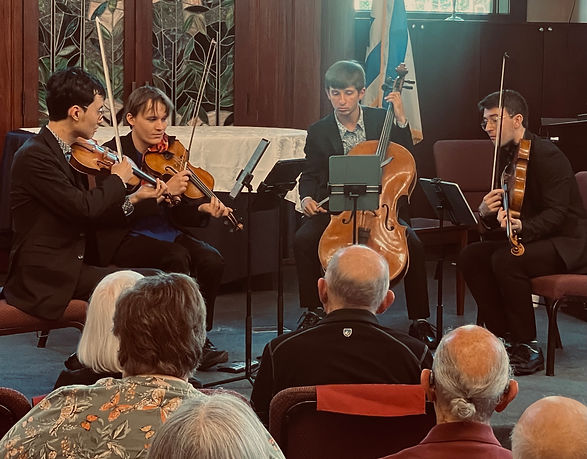
PROGRAM
String Quartet in F minor, Op. 20 No. 5 - Franz Joseph Haydn
I. Allegro moderato
II. Minuetto: Allegretto
III. Affettuoso e sostenuto
IV. Finale: Presto
Tales from the Great Lakes - Dolphins
I. Aerial Overview
II. Frisbee Field
III. Phil's Walk
IV. Canadian Misadventure
V. Sand Hill Cranes
VI. Reflection
Intermission
String Quartet, No. 10 - Ludwig von Beethoven
I. Poco adagio – Allegro
II. Adagio ma non troppo
III. Presto - Più presto quasi Prestissimo
IV. Allegretto con variazioni
PROGRAM NOTES
HAYDN OP. 20 NO. 5
Haydn’s Opus 20 publication was a group of six string quartets that forever changed the course of the genre through bold new ideas that continue to spark inspiration today. Up until this point, string quartets had been almost entirely dominated by the first violin part, but this set of works spread dialogue around the group and especially gave the cello a larger melodic role than it hadpreviously filled. Another notable change is Haydn’s frequent use of minor keys throughout the opus, which was atypical for the time. Two of the six works were written in minor keys, No. 5 being in the particularly unusual key of F minor.
During his residency as the kappellmeister for Prince Esterházy, Haydn had to spend most of his time at the prince’s palace. While this was an excellent position for his career, the palace had its drawbacks: it was far from the more central and lively Vienna, and, since it was built over a swamp, the air was humid and windy throughout the year. This situation was probably a catalyst for Haydn expressing a more somber feeling in his writing which is so prevalent in the dark F minor quartet.
The opening violin melody seems to be searching for a way to break free from the grim mood, reaching up and falling down repeatedly and often passing through painful diminished intervals. Meanwhile, the rest of the quartet responds with a four-note figure that sounds like sobbing. This four-note figure is cleverly woven into each of the other movements, most obviously as the second subject of the fugue in the finale. It becomes three repeated notes rising to a new fourth note in the middle two movements: in the second movement as dialogue between the three lower voices and the leading first violin, then in the third movement as a closing tag to the melody.On top of that motif tying the piece together, the balance of affections creates a cohesive arc.
The first and last movements are turbulent and despairing, only with occasional moments of respite that remain haunted by the surrounding dreariness. While dancelike, the minuet remains solemn, aside from a pleasantly warm middle section. But all this struggle is balanced by the thirdmovement, one of the sweetest and purest movements in the string quartet literature. It takes a simple melody and wraps it delicately in ornamentation, mostly sung by the violins with occasional comments from the lower two voices.Haydn’s Opus 20 No. 5 String Quartet in F minor was one of the first chamber music works to commit to a truly melancholy visage.
It remains a striking example of how simple ideas can express complex emotions under an expert hand.
TALES FROM THE GREAT LAKES
"The Dolphins spend each summer at music festivals, where our contrasting personalities invite constant adventure. From quirky people to breathtaking nature, inspiration for music is everywhere. We often improvise together—no rules, just free-flowing, musical conversation. These sessions spark many of our compositions, sometimes yielding fully formed themes or entire sections that make it into our final work.
“Tales From the Great Lakes” is a 23-minute rhapsody capturing stories from our time at the Great Lakes Chamber Music Festival in June 2024. It begins with “Aerial Overview,” a theme portraying a sweeping view of the lakes, expansive yet emotional. This motif meanders throughout the piece, threading the movements together. As the perspective narrows, we see locals and, eventually, four musicians playing frisbee in a field. That “Frisbee Field” music, taken straight from an improvisation, returns three times in various forms throughout the piece, the frisbee’s flight being portrayed by a playful auxiliary instrument. Next is “Phil’s Waltz,” commemorating how violinist Philip Setzer mistook wasabi for guacamole and enthusiastically ate a full scoop at the opening dinner. A cheerful waltz is interrupted by insidious ponticello bowing, evoking the spicy surprise. After a short interlude, we recall a frightening misadventure at the Canadian border after mistakenly arriving a day early for a concert. Through miscommunications, our violinist, Luke, was suspected of passport fraud. We illustrate the ensuing interrogation with sliding glissandi lines mimicking the tense dialogue.But nothing matched the terror of our encounter with Sandhill Cranes. Led by a tip from our host, Randy Schein, we searched for and found these large, sharp-beaked birds—only for them to chase us. One voice at a time joins the chase, layered with eerie textures that mimic the cranes' calls. The piece closes with a calm, nostalgic reflection on our unforgettable time around the Great Lakes."
BEETHOVEN OP 74 “Harp”
Living in Vienna during the beginning of the 19th century, Beethoven was surrounded by conflict. Napoleon’s conquest laid siege to cultural capitals throughout Western Europe. Immersed in sounds of war and suffering, Beethoven’s compositional output during this period is marked by introspective reflections and defiant reactions. Simultaneously, Beethoven is also internalizing the knowledge that he is losing his hearing. The breadth of emotional scope and courageous response in these works qualify this time as his "heroic period."
The Op. 74 “Harp” quartet is Beethoven’s gateway from adherence to traditional Classical forms to groundbreaking stylistic and conceptual transformations. The first movement opens with a question, evolving into a contemplative searching for meaning and resolution. This leads into a declaration of humanity and asserting of direction. The Allegro continues to affirm life and the exploration of independence. The middle section features a cumulative pizzicato ascent that flows between the voices, as if being played by a harp. The movement ends with a joyful flourish.The second movement can be considered as one of the purest visions of Beethoven’s heart. This exploration of all sides of love: sublime beauty, painful loss, total acceptance. The main theme is visited throughout the movement, decorated in different glowing shades. This is contrasted with a painful, inward drifting towards despair and isolation, marking the underside of such deep emotion. In the third movement, Beethoven engages in a battle with fate. The stormy, insistent opening is a struggle against an impending threat that is pounding on the doorstep. Reflecting the war around him, or his own personal battles, the storm is brewing. As suddenly as the conflict begins, the second section bursts forth with brilliant exuberance, as if defying fate. The juxtaposition between doom and courage mirror the thrilling intensity of humanity.
The final movement begins with a theme that rises above the weight and struggle of what came before. Once repeated, Beethoven begins to explore all the storytelling possibilities in colorful variations on the theme. This creates a mini-opera where you can depart from reality and indulge in a playful conversation of voices—the perfect ending to an epic journey.
BIOS
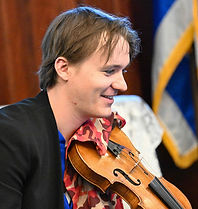
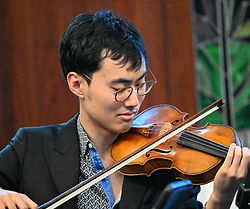
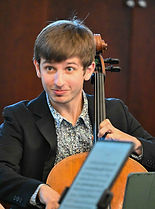
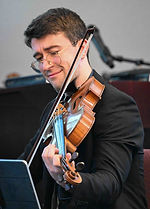
Winners in 2026 of the Lerman Gold Prize and the Audience Choice Prize at the 2026 Chesapeake Chamber Music Competition, the Dolphins have played music and composed together for 4 years. This fall they become the resident string quartet at New York City's New Music School.
WATCH and LISTEN to their background interview with TMA board member Rod Page on Tahoe Music Alive's YouTube channel.
Luke Henderson, violin.
Luke, 22 years old, from Raleigh, North Carolina, began playing violin at the age of three. He currently studies with Ms. Laurie Smukler at The Juilliard School in New York City. Luke made his solo debut with the Georgia Philharmonic at age 12. In 2020, Luke was the Gold Medal Winner in the Fischoff National Chamber Music Competition and the Coltman National Chamber Music Competition. In 2021 Luke won The American Prize in Instrumental Performance and the Grand Prize at the World Classical Music Awards.
Isaac Park, violin.
Isaac began his studies at the age of five with Sunny Kang, and has studied with Li Lin, Wei He, Helen Kim, and Chen Zhao. In 2024, he earned his Bachelor's Degree from Juilliard and is continuing his masters studies with Joseph Lin. He has enjoyed chamber music from an early age, playing in non profit groups, the Young Chamber Musicians, and at various festivals.
Ian Maloney, cello.
A cellist, composer, and chamber musician, Ian is from Hackensack, New Jersey. He holds both a BM and MM from The Juilliard School, where he studied under the mentorship of the legendary Joel Krosnick. Ian has performed across the country alongside renowned artists such as Daniel Phillips, Keith Robinson, Molly Carr, and others.
James Perucil, viola.
James is a violist and composer interested in chamber music, community connection in many forms, and championing the viola as a solo instrument. James earned his Bachelor of Music degree from The Juilliard School, where he is now pursuing his Master of Music degree on full scholarship as a Kovner fellow under the tutelage of Samuel Rhodes and Molly Carr.
Our Story
Every website has a story, and your visitors want to hear yours. This space is a great opportunity to give a full background on who you are, what your team does, and what your site has to offer. Double click on the text box to start editing your content and make sure to add all the relevant details you want site visitors to know.
If you’re a business, talk about how you started and share your professional journey. Explain your core values, your commitment to customers, and how you stand out from the crowd. Add a photo, gallery, or video for even more engagement.
Meet The Team

Don Francis


Founder & CEO

Ashley Jones
Tech Lead

Tess Brown
Office Manager

Lisa Rose
Product Manager

Kevin Nye
HR Lead

Alex Young
Customer Support Lead
Our Clients


